Offshore ocean racing is an extreme laboratory for weather decision-making. The margins are small, the consequences of error are immediate, and the competitive pressure to extract every possible advantage from the forecast is constant. On an Ultim, a single knot of wind can translate into a 2.5-knot difference in boat speed. At that level of sensitivity, routing becomes a decisive performance driver, not an auxiliary tool.
Thirty years of continuous race monitoring
For more than 30 years, offshore multihulls have been continuously monitored 24/7. In major events such as the Route du Rhum and Jules Verne Trophy attempts, this has included full race support operations: automated routing systems, continuous weather analysis, and real-time decision support.
In races where external routing assistance is not permitted, including the Vendée Globe and The Ocean Race, shore-based monitoring takes a different form, but remains equally formative. Tracking these races continuously, interpreting evolving weather systems across the Southern Ocean, and understanding how skippers make decisions under extreme pressure builds a depth of meteorological judgment that cannot be acquired any other way.
Christian Dumard and Basile Rochut, co-founders of Marine Weather Intelligence, have operated within both environments. This is a domain they know from the inside.
About Christian Dumard
Christian Dumard’s expertise is rooted in a lifelong connection with sailing. He grew up navigating the world with his family and went on to become a professional navigator (1983–2002), competing in the 1995 America’s Cup in San Diego, the Corum Sailing Team (1991–1996), and as a member of the French Tornado Olympic Sailing Team (1989–1992).
He has provided weather analysis and training to skippers and navigators across all major offshore races: Volvo Ocean Race, Vendée Globe, Route du Rhum, Fastnet, Sydney Hobart, Transpacific, Mini Transat, and La Solitaire du Figaro. He has also handled complex operations including the transport of the James Webb Telescope from Los Angeles to Kourou, oil platform towing, and salvage operations. His experience in Arctic regions adds a further layer of constraint-driven meteorological expertise.
In 2023, he co-founded Marine Weather Intelligence with Basile Rochut, combining this operational background with modern AI-based forecasting and routing technology.
AI as an extension of routing expertise
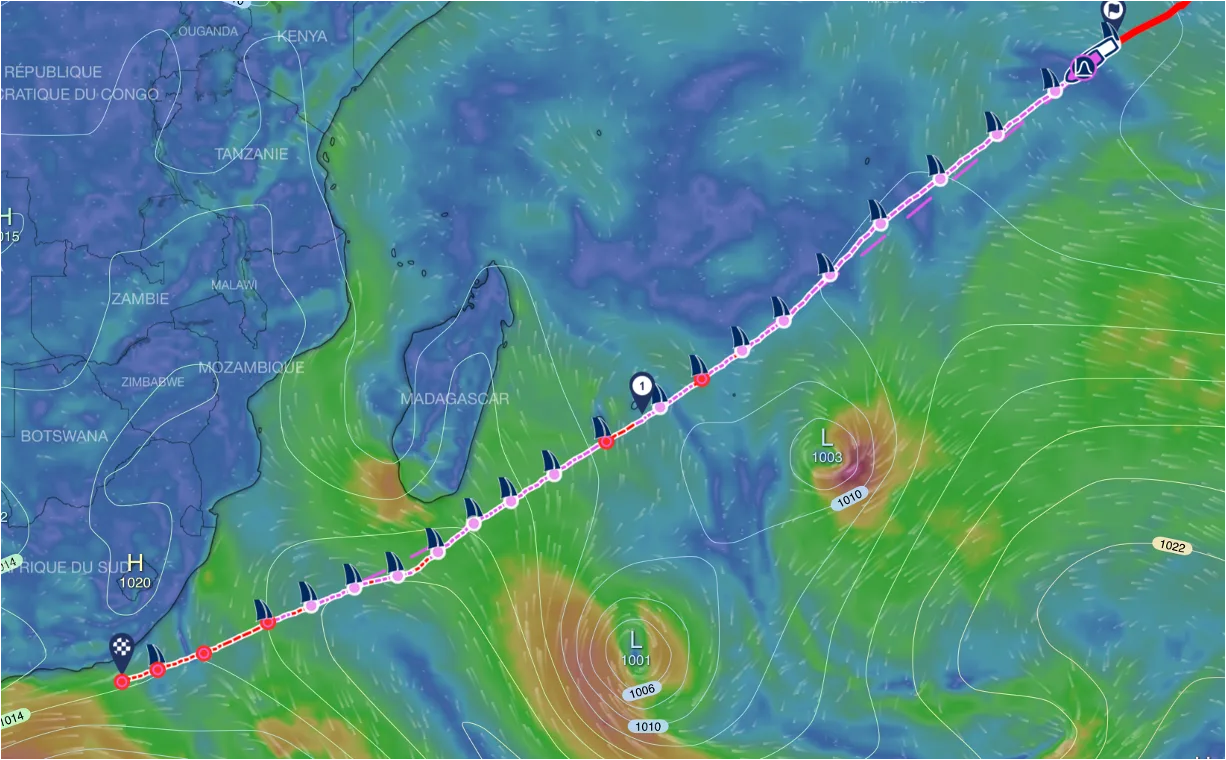
Racing meteorology operates at a level of granularity that standard maritime forecasting is not designed to deliver. The key question is never only what the weather will do, but what it will do here, for this vessel, at this speed, over the next hours and days, with explicit integration of uncertainty.
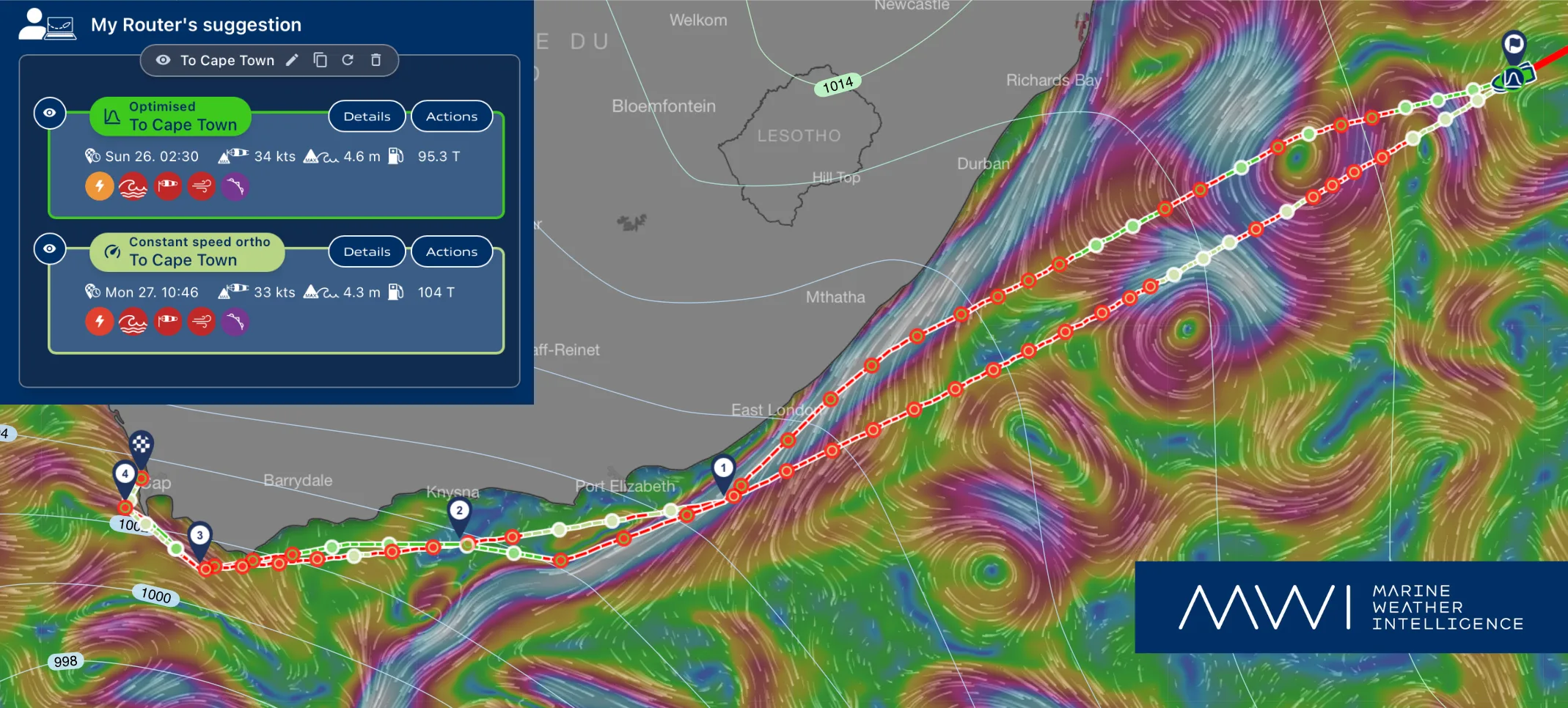
Today, this racing-grade expertise is combined with AI-driven routing systems that enable faster scenario testing, more frequent updates, 24/7 monitoring, and enhanced multi-objective optimisation. AI does not replace offshore racing expertise. It scales and operationalises it.
Applied to commercial operations, this translates into more efficient routing, reduced fuel consumption, fewer unnecessary deviations, and more reliable ETAs.
From offshore racing to every sector that depends on the sea
Through Marine Weather Intelligence, this combined system of racing-proven meteorological expertise and AI-driven routing technology is now applied to towage and heavy transport, commercial shipping, offshore energy, and yacht owners.
The context changes. The standard of decision-making does not.