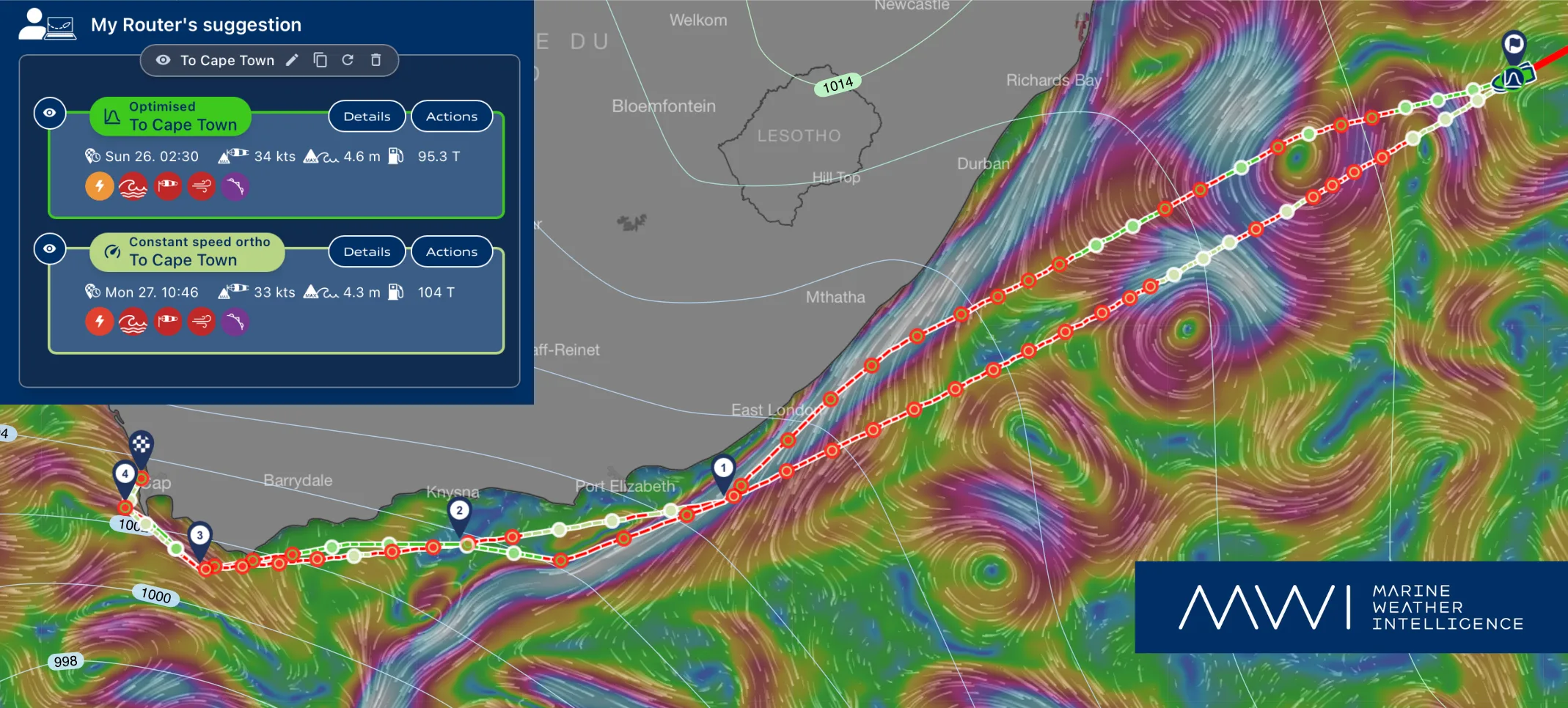
Weather routing is not just about avoiding storms, it is about finding the optimal balance between speed, sea state, and fuel burn across the full passage. Small course and speed adjustments, made at the right moment, compound into significant savings.
The challenge
Shipping operators must constantly balance fuel costs, schedule reliability, and environmental performance. On shorter routes, traditional navigation methods often rely on direct routes and fixed speeds, leaving limited room for optimisation.
Real-world conditions can impact vessel performance significantly. Without integrating weather and current data into routing decisions, inefficiencies remain largely unaddressed.
How route optimisation works
A direct rhumb-line route is the shortest track between two ports, but “shortest” and “most efficient” are not the same thing. Currents, wind, and swell are not distributed evenly along that line, and a route that ignores them sails past favourable conditions just off to one side.
Route optimisation works by deviating from the direct track just enough to ride those conditions, then adjusting the vessel’s speed profile continuously along the way, without giving up meaningful time or adding meaningful distance.
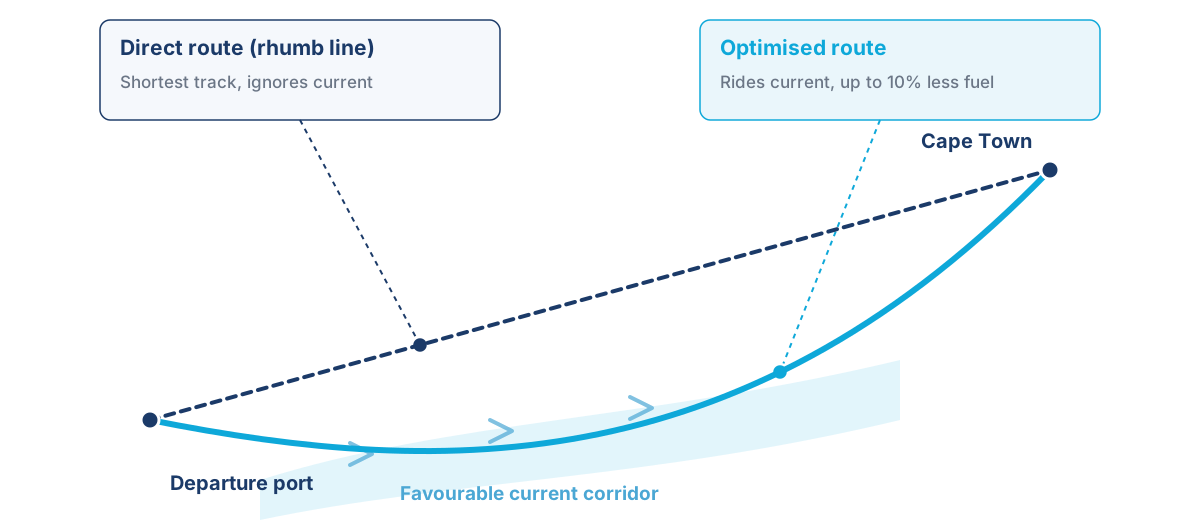
On the Cape Town voyage above, the optimised route added only a small deviation in distance, but that deviation put the vessel in a current corridor for most of the passage, cutting fuel burn without extending the schedule.
Results
Using MWI Shipping routing software, a voyage to Cape Town was optimised to achieve:
- Up to 10% fuel savings on a simple route, achieved mainly by leveraging favourable currents
- Reduced transit time without increasing engine load
- Minimal deviation from the original route
The optimisation was achieved by aligning the route with favourable conditions and improving the vessel’s speed profile throughout the voyage.
On longer and more complex routes, where environmental conditions and routing flexibility play a bigger role, potential savings can increase significantly, with average fuel savings of up to 15%.
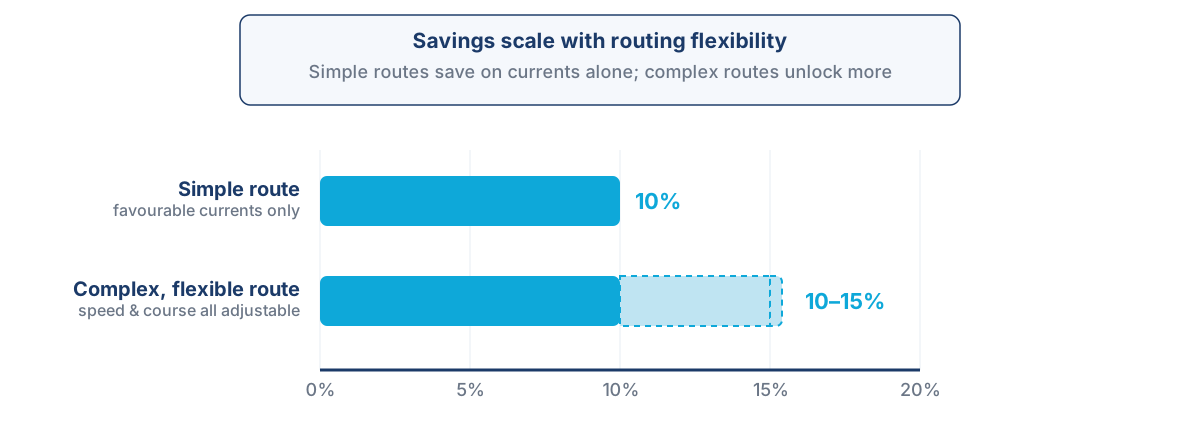
The gap between the two isn’t about the routing method changing, it’s about how much room the voyage gives it to work with. A short, constrained passage only offers one current corridor to exploit. A longer route crosses more variation in wind, current, and sea state, and gives the optimisation more decisions to make: where to deviate, and how to shape the speed profile leg by leg.
Why it matters
Fuel consumption at sea is driven by more than distance alone. Considering environmental conditions allows operators to improve efficiency and lower overall fuel consumption.
This approach enables:
- Immediate cost savings per voyage
- Lower emissions and improved environmental performance
- Scalable impact across multiple voyages and fleets
How Marine Weather Intelligence delivers this
Finding the current corridor or the right speed profile once, at departure, isn’t enough, forecasts update, and a route optimised for the conditions expected on day one can drift out of date by day three. Marine Weather Intelligence’s approach is built around three things:
- 24/7 expert monitoring, so routing recommendations are reviewed by a weather router, not just generated once and left unattended for the length of the voyage.
- Continuous re-optimisation, updating the recommended course and speed profile as new forecast data comes in along the route.
- Fleet-level consistency, so the same optimisation logic applies whether it’s a single simple passage or a complex, multi-leg route, scaling the approach across an operator’s full fleet rather than one voyage at a time.
Applied consistently, this is what turns a single voyage’s 10–15% fuel saving into a recurring reduction across an operator’s schedule, with the CO₂ reduction potential to match.
Practical takeaways for operators
- Don’t assume the direct route is the efficient route: check what currents and weather look like just off the rhumb line before committing to it.
- Treat routing as a continuous decision, not a one-time plan set at departure, since forecasts change over the course of a voyage.
- Expect more from longer or more complex routes: the more flexibility a passage allows, the more there typically is to gain.
Key insight
“Small route adjustments can significantly reduce fuel consumption, even on short voyages, demonstrating that major operational overhauls are not always necessary for meaningful efficiency gains.”