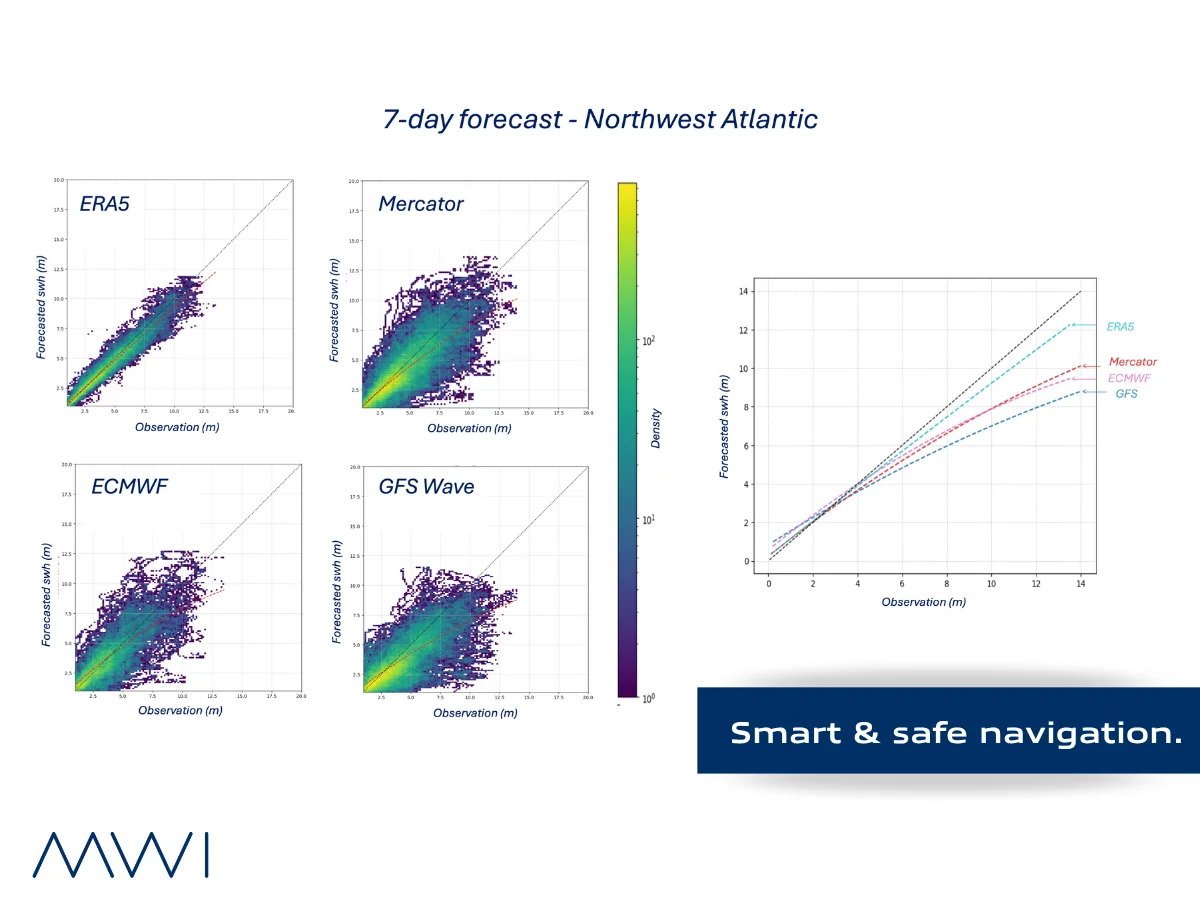
Not all weather models perform equally in all regions and conditions. Marine Weather Intelligence is building a rigorous qualification framework to ensure every routing recommendation rests on the most reliable forecast data available.
Why model qualification matters
For skippers and captains, choosing the right route is not just a decision, it is a responsibility. Weather models shift constantly, and what looks like a safe passage in the morning can become a risk by evening.
Marine Weather Intelligence does not just optimise routes: it delivers end-to-end guidance rooted in technical expertise and reinforced by AI-assisted analysis. From routing algorithms to the qualification of input data, every recommendation is backed by reliable, science-based inputs.
This qualification work is what allows routing recommendations to stay reliable even without a background in marine meteorology.
Weather model performance varies by region and conditions
Not all weather models are created equal. Their accuracy varies by region, forecast length, and meteorological scenario. Picking the wrong one can mean sailing into unexpected storms or wasting precious time on overly cautious detours.
Marine Weather Intelligence runs a dedicated research programme to evaluate and benchmark the performance of major institutional models: analysing how each model performs under specific conditions, identifying systematic biases, and quantifying uncertainties. The result is not just a forecast, but a fully qualified decision-making input.
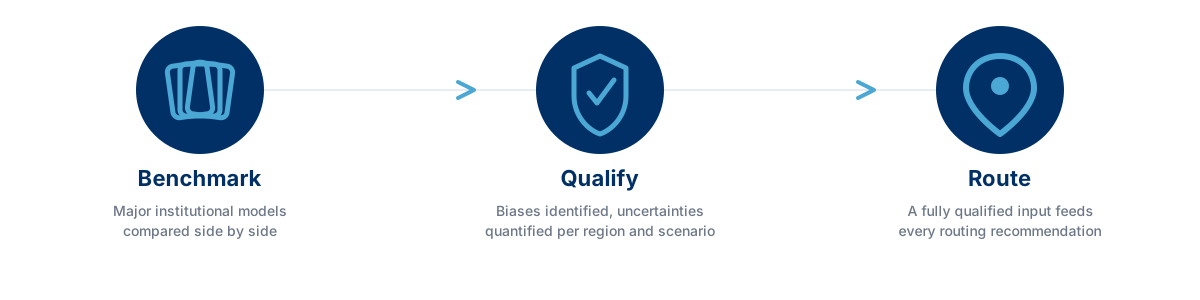
Beyond optimisation: trust in the input
Rather than relying on a single deterministic source, Marine Weather Intelligence compares models across a wide range of criteria:
- Spatial and temporal resolution
- Accuracy for key parameters (wind, gusts, wave height)
- Performance in positioning weather systems
- Responsiveness to distinct weather patterns (in development)
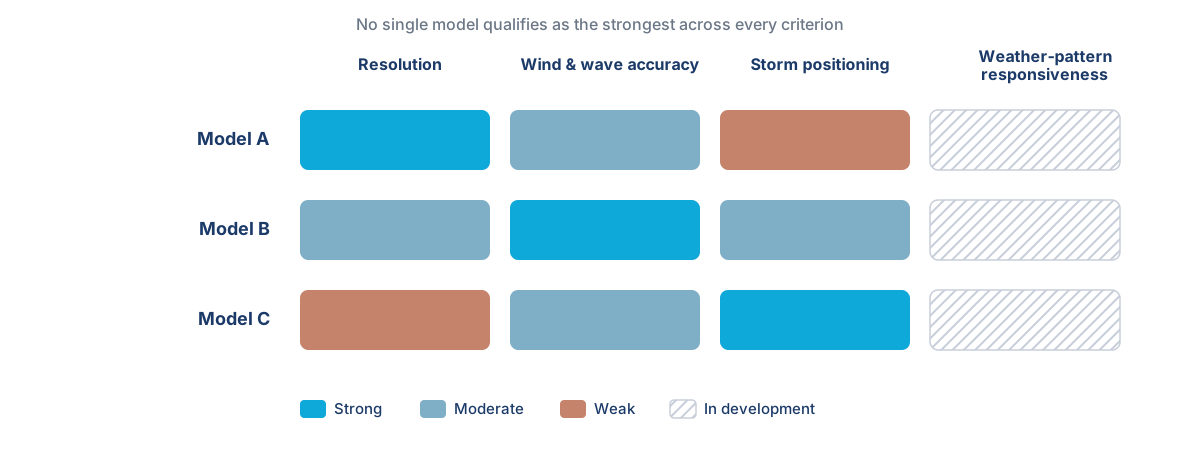
No single model wins across every criterion, which is exactly why qualification has to happen per region and per scenario rather than being decided once for a whole model. This rigorous qualification of data inputs, not just the outputs, is what gives Marine Weather Intelligence’s routing recommendations their reliability.
A key contribution from the IFREMER partnership
A significant example of this work is the recent breakthrough in wave height forecasting, developed in collaboration with IFREMER following Marine Weather Intelligence’s success in the Octo’Pousse 2023 competition.
Special thanks to Ghislain Lizée, Michaël Accensi, and Nicolas Maillard, whose contributions were essential to this achievement.
Conclusion
Model qualification is complex, but it underpins everything else Marine Weather Intelligence does. Rigorous benchmarking, AI-assisted analysis, and a commitment to continuous improvement are what keep routing recommendations reliable, not just optimised in isolation.
“Model qualification is what lets us trust the forecast before we ever start optimising the route. Get that foundation wrong, and everything built on top of it is compromised.”