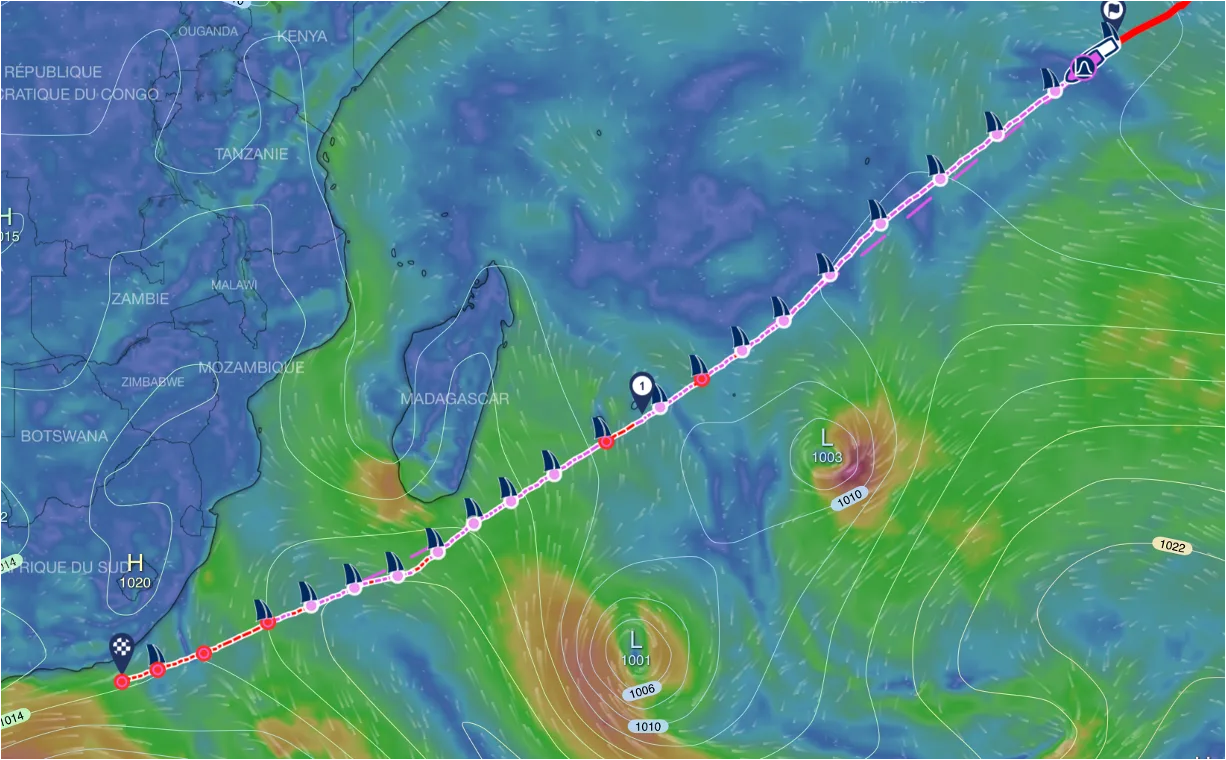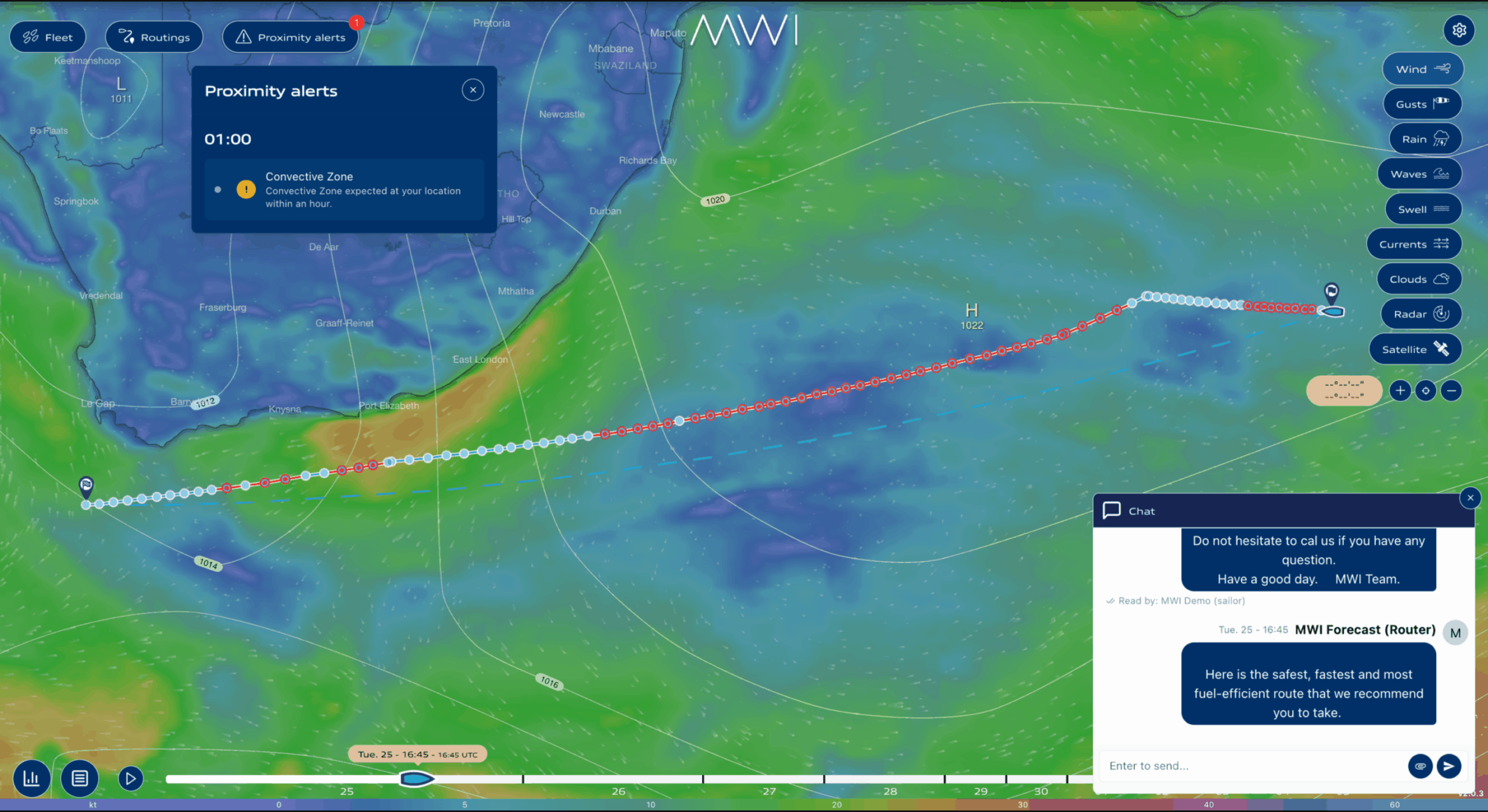
Improving fuel efficiency in shipping does not always require major operational changes. Small route adjustments can significantly reduce fuel consumption, even on short voyages.
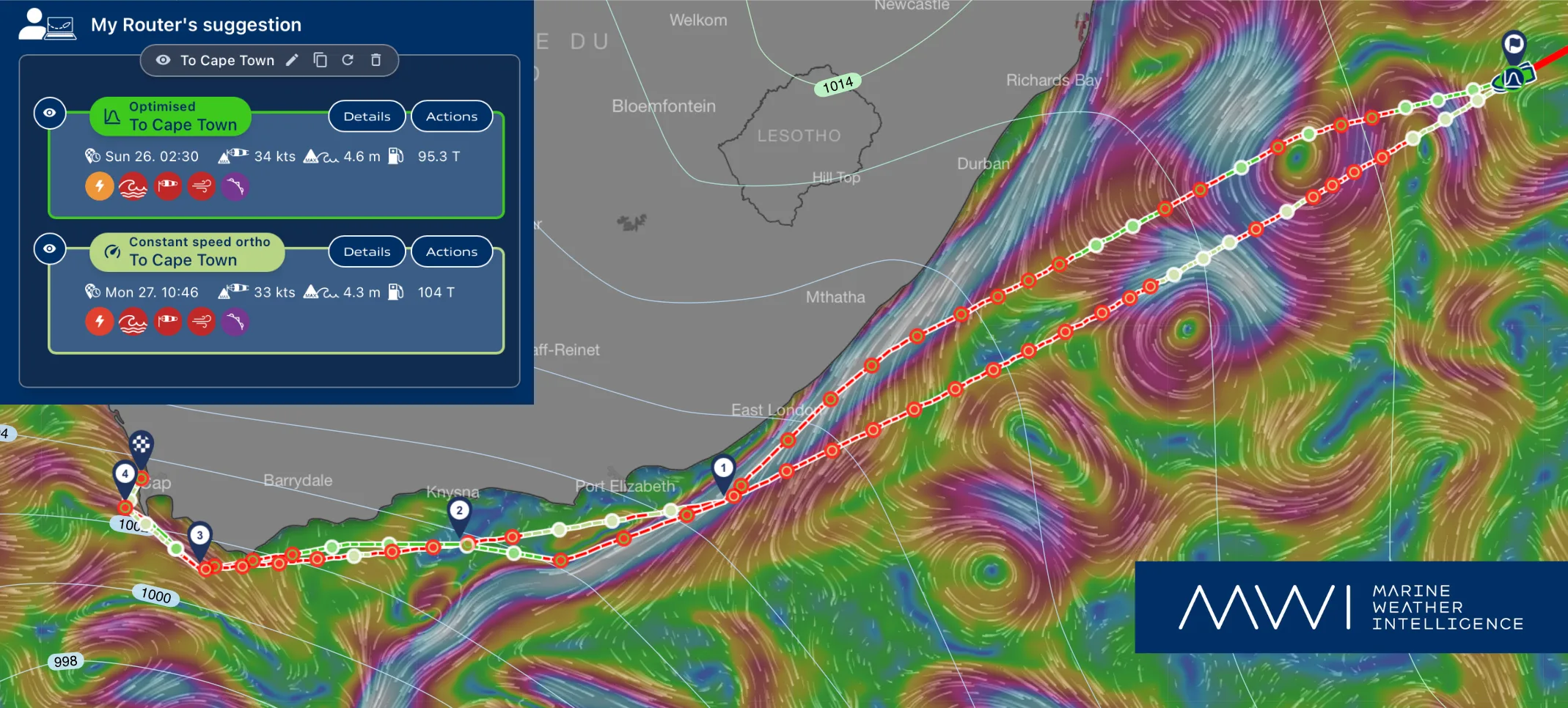
A recent case using MWI Shipping routing software illustrates how a short voyage to Cape Town was optimised to achieve measurable gains in both fuel efficiency and transit time.
The challenge
Shipping operators must constantly balance fuel costs, schedule reliability, and environmental performance. On shorter routes, traditional navigation methods often rely on direct routes and fixed speeds, leaving limited room for optimisation.
However, real-world conditions can impact vessel performance. Without integrating this data into routing decisions, inefficiencies remain largely unaddressed.
Results
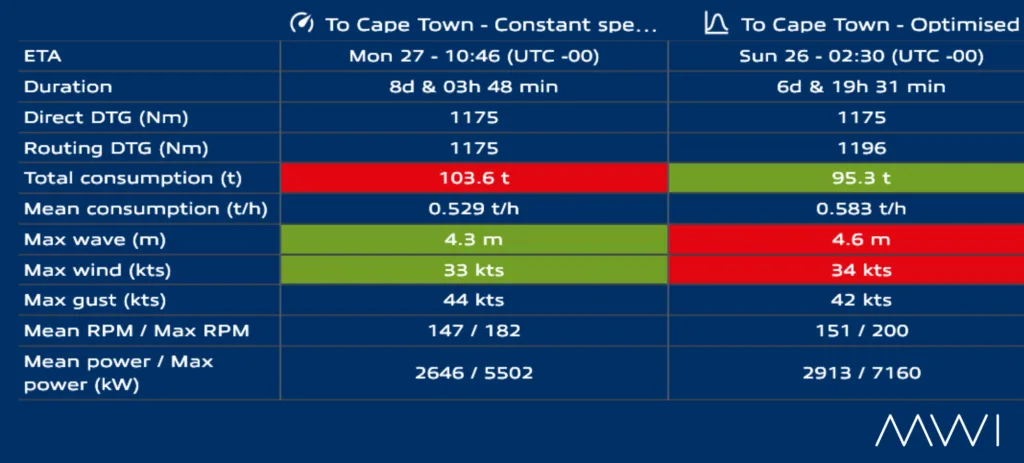
Thanks to MWI Shipping routing software, we identified a slightly adjusted route that delivered:
- Up to 10% fuel savings on a simple route, achieved mainly by leveraging favourable currents
- Reduced transit time
- Minimal deviation from the original route
The optimisation was achieved by aligning the route with favourable conditions and improving the vessel’s speed profile throughout the voyage.
On longer and more complex routes, where environmental conditions and routing flexibility play a bigger role, potential savings can increase significantly, with average fuel savings of up to 15%.
Why it matters
Fuel consumption at sea is driven by more than distance alone. Taken environmental conditions into account allows operators to improve efficiency, and lower overall fuel consumption.
This approach enables:
- Immediate cost savings
- Lower emissions
- Scalable impact across multiple voyages
At Marine Weather Intelligence, we enable operators to anticipate changing ocean conditions and optimise routing and speed to minimise fuel consumption and
weather exposure.